Violet Harkness
Just DesertsViolet Harkness is one of the essential working figures behind the refuge at Grenadine Reef and one of the people who make Elizabeth Bennet’s unusual independence possible. As the younger Harkness sister, she enters the story through service and survival, but her role expands into confidential correspondence, trauma-informed care, security, and administrative work. Her importance lies less in public status than in the invisible infrastructure she builds: she helps women remain safe, helps Elizabeth move through a society that restricts her, and repeatedly converts trust into action.
Identity and Place at Grenadine Reef
Violet Harkness lives and works at the dower house on Grenadine Reef with her older sister, Vivian Harkness. The sisters had originally come there because Violet needed a refuge, while Vivian accompanied her rather than abandoning her to recover alone. Instead of returning to domestic service, both women became part of the small permanent staff under Mrs. Perkins and helped run the dower house from day to day. Violet’s position therefore combines employment with protection: the house is not merely a workplace but the setting in which she and other women can regain safety and value after abuse.
Her knowledge of Lady Radha Pentland’s history is central to the moral atmosphere of the refuge. When Elizabeth Bennet first knew Lady Radha, Elizabeth was told only that the older woman’s experience had been “very grim.” Violet later shared the details of her own story and of other women’s experiences with Elizabeth, while respecting the limits of what those women wished to disclose. Violet does not turn trauma into spectacle. Her testimony gives Elizabeth a general understanding of what abused women endure without requiring every survivor to surrender the privacy of her suffering.
Confidential Correspondence and Chaperonage
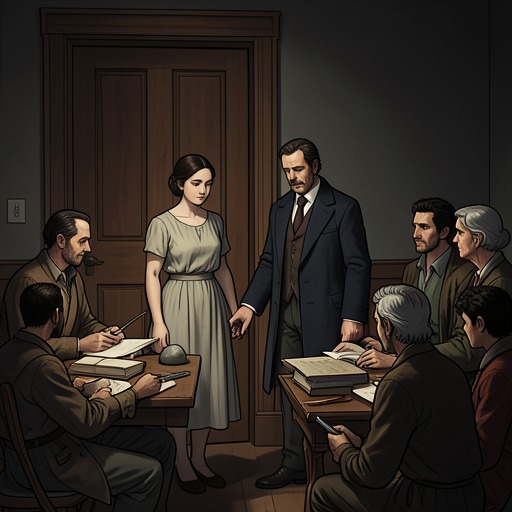
Violet’s practical intelligence first becomes visible in the correspondence between Elizabeth and Sir David Pentland. Because Elizabeth, as a young gentlewoman, could neither be alone with an unrelated man nor correspond directly with one, the Harkness sisters created a carefully managed channel between them. Elizabeth sent letters to Vivian describing the questions she intended to ask Sir David; Vivian repeated those questions to him, and she or Violet wrote down his answers and questions in return. Violet thus helped maintain a “wafer thin veneer of respectability” that allowed an emotionally important relationship to continue without openly violating social rules.
This work was not mechanical transcription. It required discretion, memory, judgment, and an understanding of both correspondents. Sir David Pentland and Elizabeth Bennet maintained a proper, well-chaperoned distance, yet their visits and letters became crucial to both. During Elizabeth’s absence from the country, Violet read Elizabeth’s letters aloud while Vivian listened and responded, and Violet took notes as the basis for the return letters. The arrangement preserved Sir David’s connection with Elizabeth after Lady Radha’s death and gave Elizabeth a means of continuing a relationship that the conventions of unmarried womanhood would otherwise have made nearly impossible.
Violet also serves as a driver and chaperone on the estate. Her presence with Vivian allowed Elizabeth to meet Sir David without exposing herself to the charge of impropriety, while the sisters’ daily familiarity with the manor, stables, grounds, and servants made them reliable companions rather than ornamental attendants. Their work shows how the refuge depends on female labor that is social, clerical, emotional, and logistical all at once.
Recovery, Work, and Relations with Other Women
Violet’s own recovery shapes her understanding of what the dower house must provide. She explains that women arriving there need to feel safe, to have time to come to terms with their circumstances, and then to feel valued. The refuge supplies the first two through security and companionship, especially the presence of women who have lived through similarly terrible experiences. The third depends on work, respect, and the restoration of practical competence. Violet’s account makes recovery a social process rather than a private cure imposed upon an injured individual.
Her friendship with Gladys Chambers illustrates the community formed within that process. Violet had often spoken of Gladys, and the two appeared to have developed a close friendship. When Sir David arranged for Violet, Gladys, and Yvonne Smith to travel by post to Liverpool, he did more than pay for transportation: he enabled Violet and Yvonne to return safely together while recognizing that women’s movement after abuse required planning and protection.
Violet’s growing confidence is also marked by her changing relationship to male presence. When Sir David asked whether she and Vivian would move from the dower house to the main house, he explicitly made it a request rather than an order. Violet acknowledged that male servants would once have frightened her. Yet years of driving Elizabeth, chaperoning her meetings with Sir David, and seeing male staff around the estate had taught the sisters that not every man resembled the man who had imposed himself upon her. The distinction is important: recovery does not erase the original violence, but it enables Violet to judge new circumstances without treating every circumstance as identical to the past.
Security and Covert Action
The Harkness sisters’ service eventually becomes openly strategic. When Elizabeth returns to London, Vivian and Violet accompany her as companions and chaperones, while Sir David insists that four additional bodyguards protect her. The sisters themselves are also armed, although Elizabeth does not know it. Each carries a knife concealed in a special sleeve in the right boot; Violet additionally carries two disguised poniards referred to publicly as knitting needles, while Vivian carries another knife. Their domestic appearance therefore conceals a deliberate protective capacity.
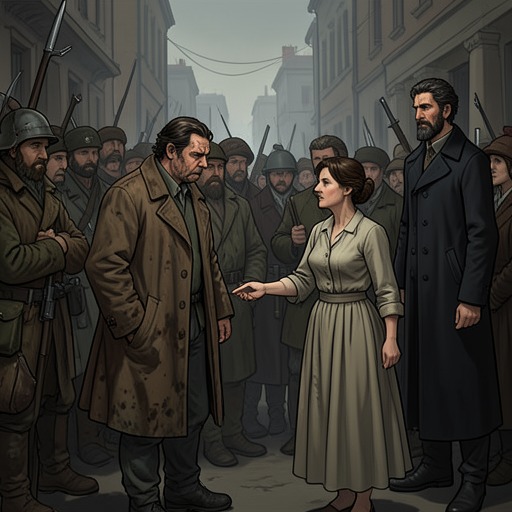
That capacity is demonstrated in the intimidation of Caroline Bingley on New Bond Street. Violet, Vivian, and Miss Jones adopt the roles of ladies and accompanying maids, locate Caroline’s townhouse, follow her when she goes shopping, and exploit the confusion of a staged disturbance. A loud bang and a scream draw the attention of the street and of Caroline’s servants; Miss Jones shoves Caroline against a wall, Vivian covers her mouth, and Violet presses both disguised knitting needles into her back. The operation depends on costume, timing, urban bustle, and the assumption that women occupying servant roles will not be treated as agents. Violet’s domestic disguise becomes a tactical advantage.
The same protective readiness appears when Lady Catherine de Bourgh arrives at Grenadine Reef to confront Elizabeth. A groom is sent for the local magistrate, and Elizabeth enters the manor house with two guards while two others and the Harkness sisters crowd in behind her. Violet’s presence places the refuge’s female staff inside the confrontation rather than leaving protection to male authority alone. She belongs to a network capable of defending the estate, preserving evidence, and preventing an older social power from simply overwhelming Elizabeth by force of rank.
Administrative Future and Narrative Significance
Violet’s role develops beyond emergency protection into a viable professional future. Before Elizabeth’s wedding, she and Vivian approach Elizabeth together with a wrapped present made for her. The gift marks the intimacy of their relationship and the sisters’ place within Elizabeth’s chosen household. Their bond is not reducible to employer and servant: they are trusted companions who have shared danger, information, and the practical burdens of Elizabeth’s public and private life.
After the marriage, Fitzwilliam Darcy proposes that Violet and Vivian assist both Elizabeth and him with note-taking and general business duties. A secretary living near Pemberley will face a doubled workload because of the estates and investments brought into the marriage, and Darcy suggests that the sisters be trained by Mr. Upshaw, a decent man and the father of daughters. The proposal recognizes abilities Violet has already demonstrated through years of correspondence, record-making, logistical planning, and confidential service. It also offers a controlled passage from refuge work into formal administrative employment.
Violet therefore represents a model of recovery grounded in agency rather than sentimental rescue. Her life joins several worlds that the social order prefers to keep separate: abused women and respectable households, domestic service and professional skill, female vulnerability and armed competence, private testimony and public action. Through her, the narrative makes visible the labor required to sustain safety. Violet is not simply protected by Grenadine Reef; she helps operate its protection, teaches others how trust can be rebuilt, and carries that ethic into Elizabeth’s future. Alongside Vivian Harkness, she turns the refuge from a charitable shelter into a working community whose members can become correspondents, chaperones, guards, friends, and eventually trained employees.